

Nutrient Profiling System☀️
A Nutrient Profiling System (NPS) has been developed and tested using the Nutritional Value Score (NVS)—a novel NPS based on priority nutrients and dietary factors predictive of noncommunicable disease risk—to better identify foods with high nutritional value relevant to health priorities.
Foods were assessed based upon their nutrient density (vitamins, minerals, protein, omega-3s), Calorie density, fiber content, and nutrient ratios reflective of chronic disease risk.
This NPS study and findings, co-authored by Ty Beal, PhD, is published at The Journal of Nutrition (Nutritional Value Score Rates Foods Based on Nutrient Density and Noncommunicable Disease Prevention).
289 foods rated☀️
289 foods were rated by nutritional value—here’s what was found 👇
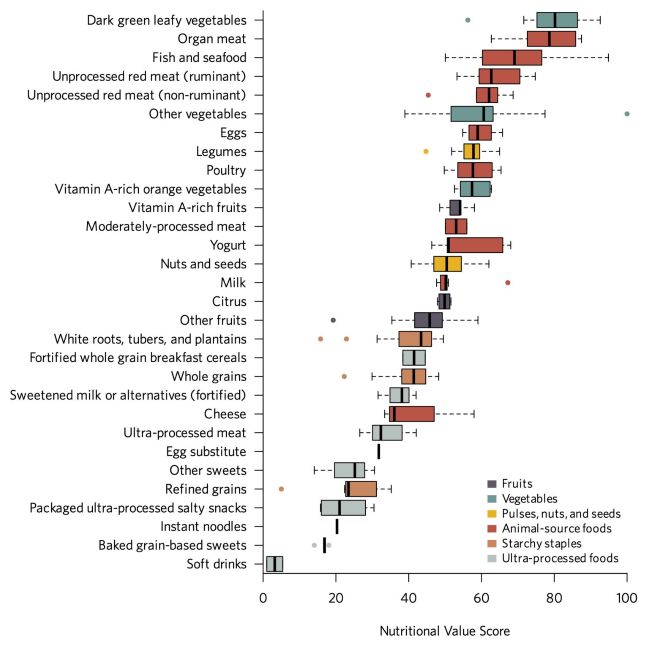
✅Organ meats, dark green leafy vegetables, fish, and seafood as the highest-scoring foods.
✅Soft drinks, grain-based baked sweets, instant noodles, packaged ultra processed snacks, and refined grains as the lowest-scoring foods.
✅Moderately high-scoring food groups (mean NVS 50–75) include fish and seafood, unprocessed red meat, other vegetables, eggs, legumes, poultry, vitamin A-rich fruits and vegetables, moderately processed meat, milk, yogurt, and nuts and seeds.
✅Moderately low scoring food groups (mean NVS 25–49) include refined grains, egg substitute, ultra processed meat, cheese, sweetened milk or alternatives, whole grains, fortified whole grain breakfast cereals; white roots, tubers, and plantains; other fruits, and citrus.
Ty Beal, PhD, a joint first author of the review, is a Nutrition Scientist | Host of The Ty Beal Show. See Ty Beal, PhD

Nutritional Value Scores 💪🏻🥛🥚🥩🥦🥬🐟💪🏻
The below chart captures the Nutritional Value Scores for common foods in Indonesia, Bangladesh, Kenya, Nigeria, and the United States.
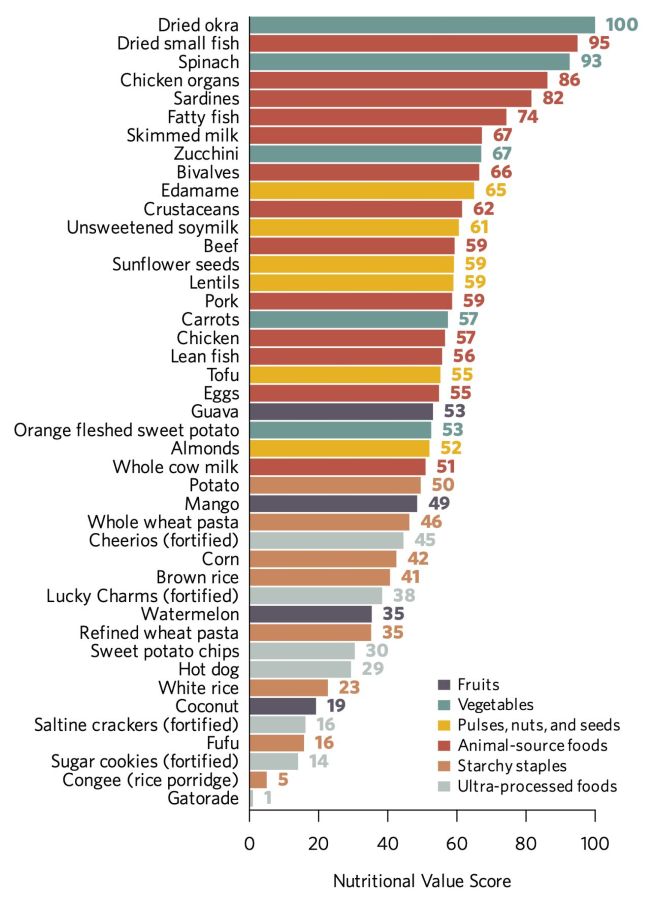
The NVS can be used to compare the nutritional value of food groups and single foods, and it can be calculated for meals and total diets.
The NVS is the weighted mean of 7 normalized dietary attribute scores: vitamins (20%), minerals (20%), protein (12.5%), n–3 fatty acids (10%), fiber (7.5%), Calories (7.5%), and nutrient ratios (22.5%)
Here you can create your own food ratings based on the components in the Nutritional Value Score (NVS): https://nutrient-lab.com/
See Carlene Starck, PhD Examining Human Energy Systems
Chef James👨🍳 has several delicious natural food duos🥘for peak performance! See Natural Food Duos for Peak Performance
See also Examining Nutrient Bioavailability
More about Ralph Teller