

Processed foods a cause of ADHD in children
An Elimination Diet (ED) or Healthy Diet (HD) may be effective in reducing symptoms of Attention-Deficit/Hyperactivity Disorder (ADHD).
The goal of the Elimination Diet (ED) was to exclude specific food components that could provoke ADHD and dysregulation problems.
The Healthy Diet aimed to reduce ADHD and dysregulation problems by restoring the intake of potential deficient macro- and micronutrients (e.g. vitamins, minerals, fibers) and/or reducing the intake of potential excessive macro- and micronutrients (e.g. saturated fats, sugar, salt). Reduced sugar intake and increased fiber intake are important indicators of a healthy and balanced diet.
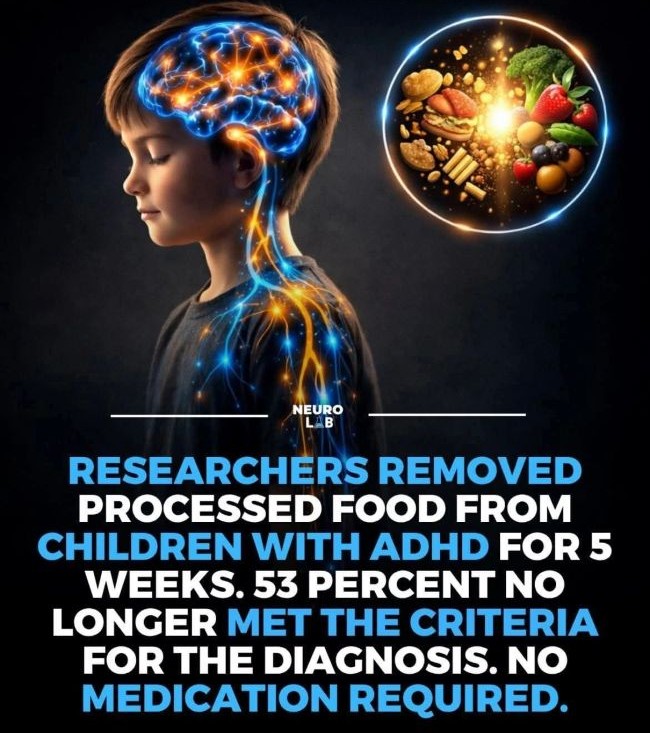
Researchers removed processed food from children diagnosed with ADHD for five weeks. Fifty three percent no longer met the criteria for the diagnosis. No medication. A dietary change.
Then they reintroduced the processed foods. In 63 percent of children who had improved, symptoms returned within days regardless of allergy test results. This was not a conventional allergic response. It was food directly disrupting brain function through inflammation and neurotransmitter interference.
The gut-brain axis explains the mechanism. Processed foods disrupt the gut microbiome, increase intestinal permeability, and allow inflammatory compounds to reach the developing brain, directly impairing the dopamine and serotonin regulation involved in attention and impulse control.
The researchers found: “All in all, our findings suggest that for families considering a dietary treatment for ADHD, starting with the HD is a low key, feasible and defensible option compared to a more intensive ED.“
This was published in The Lancet (Pelsser, L. M., et al. (2011). Effects of a restricted elimination diet on the behavior of children with ADHD. The Lancet, 377(9764), 494-503}. A broad unselected group of children. Not a fringe finding.
Diet treatment first before medications
Diet should be the first intervention considered before the use of medications. It’s important to note that many of the medications have negative side effects.
See Effects of an elimination diet and a healthy diet in children with Attention-Deficit/Hyperactivity Disorder. See NIH National Library of Medicine (i) Effects of a restricted elimination diet on the behaviour of children with attention-deficit hyperactivity disorder, (ii) The Microbiota-Gut-Brain Axis, (iii) Restriction and elimination diets in ADHD treatment
On a related topic, your child’s risk of chronic disease at 50 is being shaped in the first 1,000 days of their life. See No Sugar for Your Child’s first 1000 days
See also Examining Nutrient Bioavailability
More about Ralph Teller