


The reason may be hidden in skeletal muscle❤️🏋️♀️⚽🧗🚶♂️🏊🚴🏃♀️🏓⚾🏀
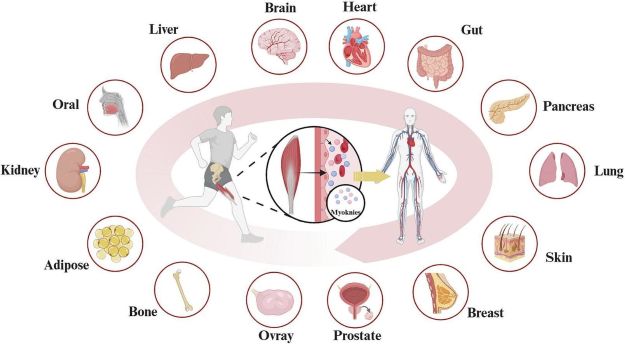
This figure from a recent review on myokine-mediated muscle-organ interactions highlights an emerging concept in cardiovascular medicine:
The heart and skeletal muscle are in constant biochemical communication.
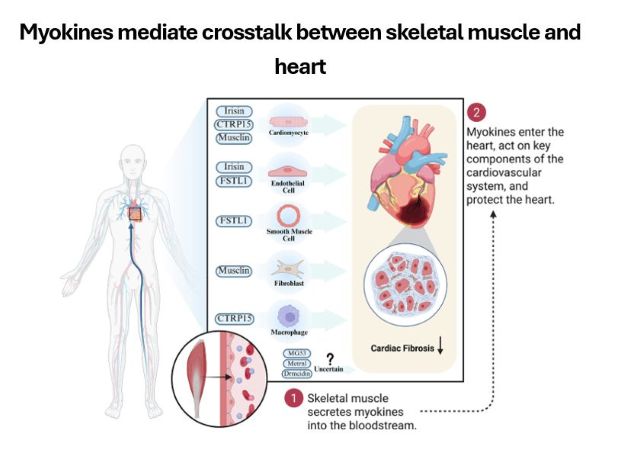
When skeletal muscle contracts during exercise, it releases signaling molecules known as myokines into the bloodstream. These molecules travel to the heart and interact with cardiomyocytes, endothelial cells, smooth muscle cells, fibroblasts, and immune cells.
The result 👇
❤️ Improved vascular function
❤️ Reduced inflammation
❤️ Enhanced tissue repair
❤️ Protection against adverse cardiac remodeling
❤️ Reduced cardiac fibrosis
Myokines such as irisin, CTRP15, FSTL1, musclin, and others appear to influence multiple pathways involved in cardiovascular health and disease.
For clinicians, this may help explain why exercise consistently improves outcomes across a wide range of cardiovascular conditions—even when changes in traditional risk factors alone cannot fully account for the benefit.
Exercise is not simply strengthening the heart through increased workload.
It is triggering a coordinated molecular response that allows skeletal muscle to actively support and protect cardiovascular tissue.
The more we uncover about myokines, the more compelling the message becomes:
Every muscle contraction sends biochemical signals that may help preserve cardiac health.
Exercise is not just training the cardiovascular system.
It may be one of the body’s most sophisticated forms of cardiovascular medicine.
See Science Direct 👉 Myokine-mediated muscle-organ interactions: Molecular mechanisms and clinical significance
Stay healthy ♥️
Christopher Fitzmaurice – Clinical Exercise Physiologist @ University of Miami Health System | Certified Cancer Exercise Trainer, Certified Strength & Conditioning Specialist, and Health Coach
More about Christopher Fitzmaurice, MS, CEP, CSCS, CET, Clinical Exercise Physiologist
#ExerciseIsMedicine #CardiovascularHealth #SportsMedicine #PhysicalActivity #Cardiology