


Small actions to management stress💡🧠🙂💓
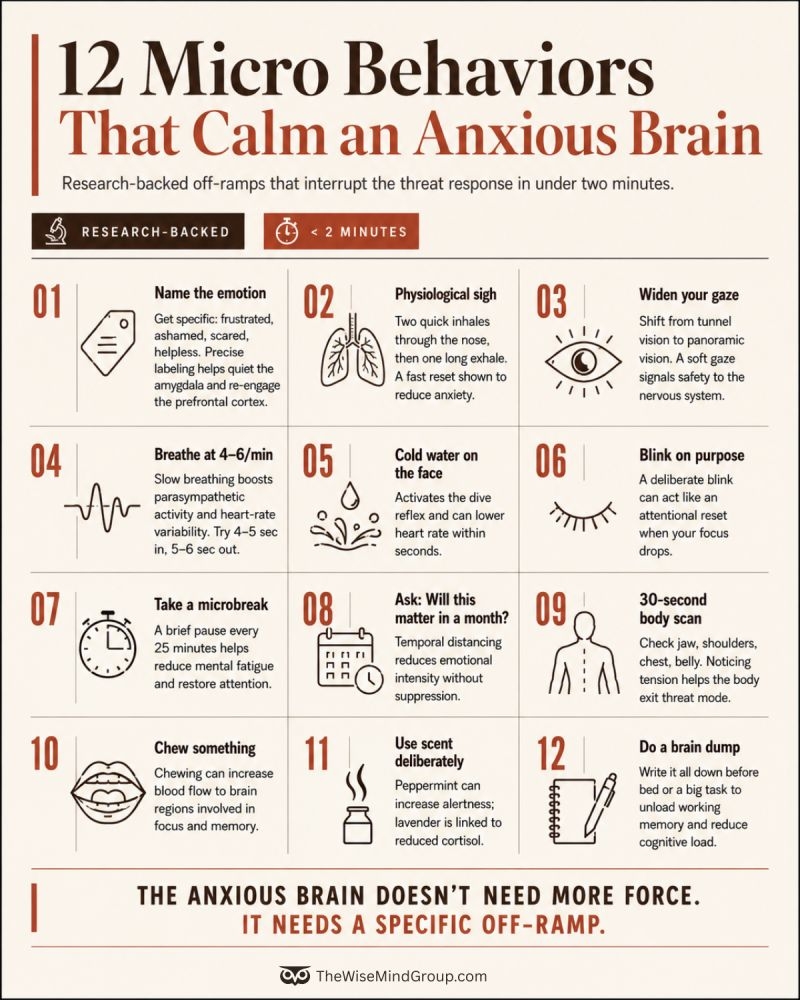
12 micro-behaviors that can calm an anxious brain.
Stress can make an everyday deadline feel like a threat. When your brain shifts into survival mode, clear thinking gets harder.
But small actions can help interrupt that response.
No complicated routine required.
1. Name the emotion precisely.
Instead of “stressed,” try “frustrated,” “scared,” or “helpless.” Research suggests labeling emotions can reduce amygdala reactivity.
2. Use the physiological sigh.
Take two quick inhales through your nose, followed by one long exhale through your mouth. Research links this breathing pattern to improved mood.
3. Widen your gaze.
Stress narrows your attention. Relax your eyes and take in your surroundings to interrupt that tunnel vision.
4. Slow your breathing.
Try 4-6 gentle breaths per minute. Slow breathing can support heart rate variability and relaxation.
5. Splash cold water on your face.
Cool water can activate the diving reflex, slowing your heart rate.
6. Blink deliberately.
Blinking creates tiny pauses in visual attention, giving your focus a chance to reset.
7. Take a microbreak.
Even short breaks can ease mental fatigue. Step away before your concentration collapses.
8. Ask: “Will this matter in a month?”
This is temporal distancing: looking at a stressful moment from a wider perspective to reduce its emotional weight.
9. Do a 30-second body scan.
Notice tension in your jaw, shoulders, or chest. Then gently release what you can.
10. Chew something when you need focus.
Some studies suggest chewing gum can support alertness and attention.
11. Use scent intentionally.
A familiar, pleasant scent can influence mood. Lavender, for example, has been studied for its calming effects.
12. Do a brain dump.
Before bed or a demanding task, write down everything on your mind. Getting thoughts onto paper may reduce mental clutter.
These work because they each engage systems that compete with the threat response rather than trying to suppress it directly.
The anxious brain doesn’t need to be fought.
It needs a specific off-ramp.
These are twelve of them.
💪 Which ones are part of your routine?
Elijah Szasz lives in Salt Lake City, Utah USA
More about Elijah Szasz – Cofounder & Managing Director, The Wise Mind Group | Clinical therapy and behavioral coaching for chronic pain, anxiety, and depression
See also 👉 Yin and Yang Practical Way to Understand Balance 👉 10 Daily Habits Supporting Brain Health 👉 10 Simple Ways to Practice Mindfulness
#NaturalHealth #Wellness #StrongNerveForce #PersonalGrowth #NaturalMedicine