
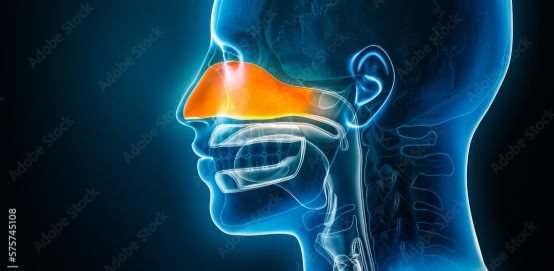

Nose and nasal passages basic function 👃🫁
The nose knows! To appreciate the cardiovascular impact of nasal breathing, let’s take a quick look at basic nasal functions.
✅Respiration. The nose serves as the primary entry point for air into the respiratory system.
✅Air conditioning, The nasal passages warm and humidity the air before entering the lungs. This function plays a key role in maintaining core body temperature and is essential for maintaining the health of the respiratory tract.
✅Filtration. The nose filters out dust, allergens and other particles from tiny hair follicles and mucus to prevent harmful substances, including pathogens, from reaching the lungs.
✅Optimizing oxygen delivery and Regulating the nervous system!
Increases the High-Frequency (HF) contribution to Heart Rate Variability (HRV) and lowers diastolic blood pressure
A recent study found 👇
Just 5 minutes of nasal breathing
✅Diastolic blood pressure. Nasal breathing acutely lowers diastolic blood pressure compared to oral breathing. Diastolic blood pressure represents the pressure in your arteries while the heart muscle relaxes between beats
✅High-Frequency (HF) contribution to Heart Rate Variability (HRV). Nasal breathing increases the High-Frequency (HF) contribution to Heart Rate Variability (HRV)—the gold standard for parasympathetic recovery. Your heart’s variability reflects how adaptable your body can be. If your heart rate is highly variable, this is usually evidence that your body can adapt to many kinds of changes. People with high heart rate variability are usually less stressed and happier. This helps balance out the sympathetic nervous system and controls the natural relaxation response, especially after you’ve been in fight-or-flight mode. It controls slowing your heart rate and blood pressure.
See American Journal of Physiology Regulatory, Integrative and Comparative Physiology Acute nasal breathing lowers diastolic blood pressure and increases parasympathetic contributions to heart rate variability.
The Science
A recent study found 👇
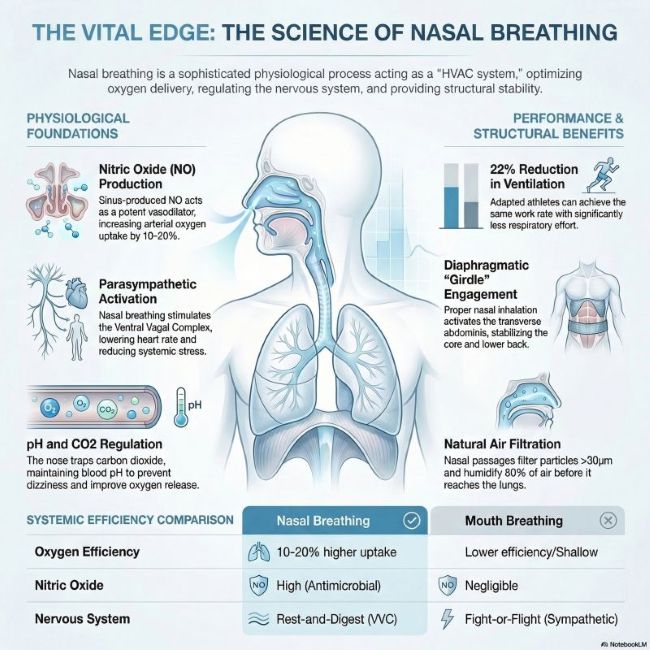
✅Nitric oxide production. Sinus produced nitric oxide can increase arterial oxygen uptake 10-20%! Nitric oxide helps your blood vessels relax and widen improving blood flow, lowering your blood pressure and reducing your risk of blood clots. See also Nitric Oxide Natural Food Sources Health Benefits
✅Parasympathetic activation. Nasal breathing stimulates the Vental Vagal Complex lowering heart rate and reducing systemic stress
✅pH and CO2 regulation, The nose traps carbon dioxide maintaining blood PH to prevent dizziness and improving oxygen release.
Athletic Performance💪🏻
Nasal breathing can improve athletic performance 👇
✅Breathing and oxygen delivery efficiency. Nasal breathing can achieve for athletes the same work rate with 22% less respiratory effort.
✅pH and CO2 regulation, The nose traps carbon dioxide maintaining blood PH to prevent dizziness and improving oxygen release.
More about Ralph Teller