

Riboflavin health benefits 💪🏻☀️
Riboflavin, also called Vitamin B2, works to help your body convert carbohydrates into fuel. Riboflavin’s primary function is central to how the body generates energy from food. It serves as a precursor to two major coenzymes: flavin adenine dinucleotide (FAD) and flavin mononucleotide (FMN). These flavocoenzymes help in the metabolism of carbohydrates, fats, and proteins. These coenzymes play a critical role in the electron transport chain, which is responsible for generating adenosine triphosphate (ATP), the body’s main energy molecule. Without sufficient riboflavin, the body’s ability to produce energy can be compromised, causing fatigue and weakness.
Vitamin B2 It is an essential nutrient as the body cannot on its own produce it in sufficient amounts or store large quantities. Therefore, it is important, especially for [physically active people, competitive athletes and endurance athletes, to maintain a diet with natural foods high in Riboflavin.
Role in red blood cell production🩸
Riboflavin is also essential for the production of red blood cells which carry oxygen throughout the body. Riboflavin helps the body absorb and utilize iron, an essential for red blood cell formation. Riboflavin is also involved in the synthesis of hemoglobin, the protein in red blood cells responsible for transporting oxygen. Riboflavin intake helps prevent anemia.
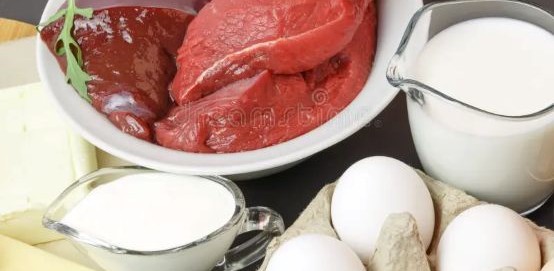
Natural food high in Vitamin B2 💪🏻🥛🥚🥩🥦🥬🐟
Here are top natural food sources of riboflavin:
✅Beef Liver. Beef liver is the richest source of riboflavin outside of supplements. A three-ounce serving of cooked liver contains as much as 2.9 milligrams of riboflavin – twice the daily requirement See Achieving a Protein Quality Diet.
✅Dairy. Whole milk, plain yogurt, cheese, cottage cheese are excellent sources of riboflavin. See Raw Milk Nutrient Content
✅Eggs. Egg yolks are rich in B vitamins, including riboflavin. One whole egg has 0.2 milligrams of riboflavin, or about 20% of the daily recommended value. See Eggs – The Next Best Thing to Mother’s Milk!
✅Almonds. Almonds are an excellent source of riboflavin protein, fiber, and healthy fat, An ounce of dry-roasted almonds has 23 % of the riboflavin daily recommended intake.
✅Broccoli. A cup of raw chopped broccoli contains about 8% of the daily intake recommendation of riboflavin.
✅Spinach. One cup of cook spinach offers 33$ of the daily recommended intake of riboflavin.
✅Mushrooms. A ½ cup serving of portabella mushrooms contains 15% of the daily value of riboflavin.
✅Salmon. An 6oz serving of Salmon contains 64% of the daily value of riboflavin.
✅Clams. Clams contain about a third of the riboflavin you need to consume in a day.
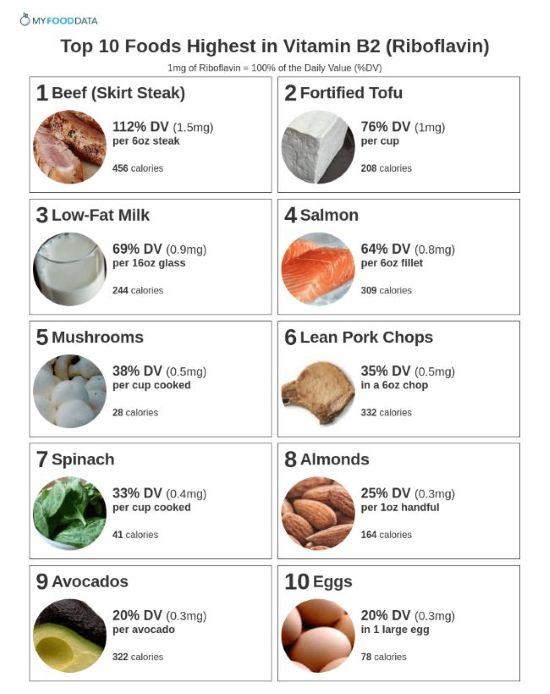
Chef James👨🍳 has several delicious natural food duos🥘for peak performance! See Natural Food Duos for Peak Performance.
Riboflavin and athletic recovery💪🏻
A recent study provides evidence that riboflavin supplementation immediately before and during prolonged running may reduce muscle pain and soreness during and at the completion of an ultramarathon. See this study published in the NIH A Placebo-Controlled Trial of Riboflavin for Enhancement of Ultramarathon Recovery,
Takeaway 💪🏻
Maintain a diet high in riboflavin to fuel your training and peak athletic performance!
You’re in control!
More about Ralph Teller